

Angelshark (Squatina squatina). Norsk: Havengel.
No official record yet
Villmarksliv's official list of Norwegian sport-fishing records has no record for Angelshark yet. The first registered fish that meets the rules becomes the record.
About Angelshark
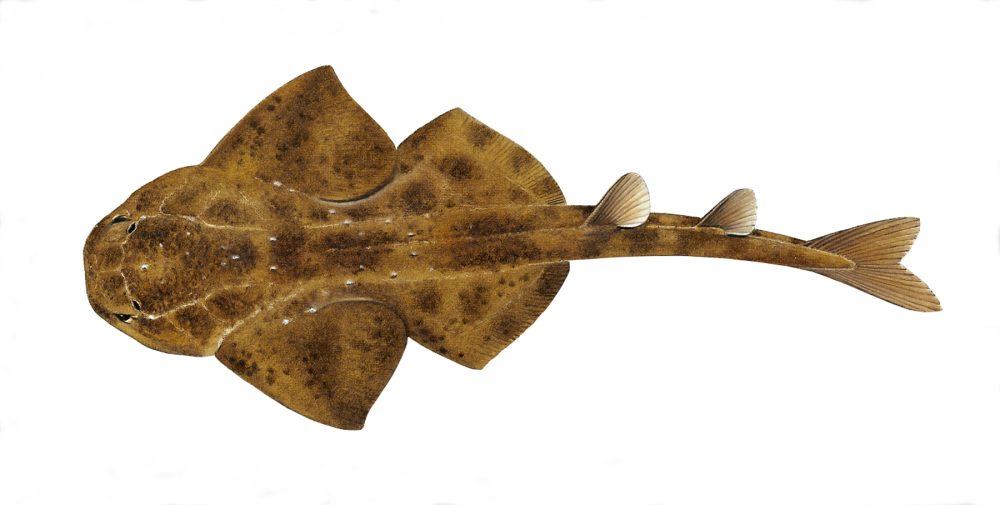
Jan Fekjan (CC BY-SA 4.0)
The angelshark (Squatina squatina) looks like a cross between a shark and a ray. Its body is broad and flat, with large, wing-like pectoral and pelvic fins, but unlike rays the gill slits are placed on the sides of its head. The back is grey or brown with small light and dark spots, and it has cone-shaped barbels near the mouth. Females can reach about 2.4 m and males 1.8 m, weighing up to about 80 kg. It lives on sand and mud in shallow coastal water, burying itself and ambushing flatfish and other bottom fish, skates and squid, mostly at night. Females give birth to litters of 7–25 live pups. Bycatch has wiped it out across much of its former range, and the IUCN now classes it as Critically Endangered (CR). In Norway it has only been caught a couple of times, in the outer Oslofjord, and is listed as Not Applicable (NA) on the Norwegian Red List 2021.
Sources: Artsdatabanken, Store norske leksikon, Wikipedia
- Habitat: Saltvann
Biggest Angelshark in FishComp
Caught a Angelshark? Log it in FishComp.
Log your catchHow to register a Norwegian record
- Norwegian sport-fishing records are registered with Villmarksliv, not with FishComp. Read the rules before you do anything else with the fish.
- Records are based on weight and approved by a jury. You give the weight and length, where it was caught, the gear you used and any witnesses.
- Keep your photos and notes from the catch. Logging it in FishComp does not register a record.
Source: Villmarksliv's official Norwegian records (klikk.no).